Insulated Taper Pin for Large Generators in Power Plants


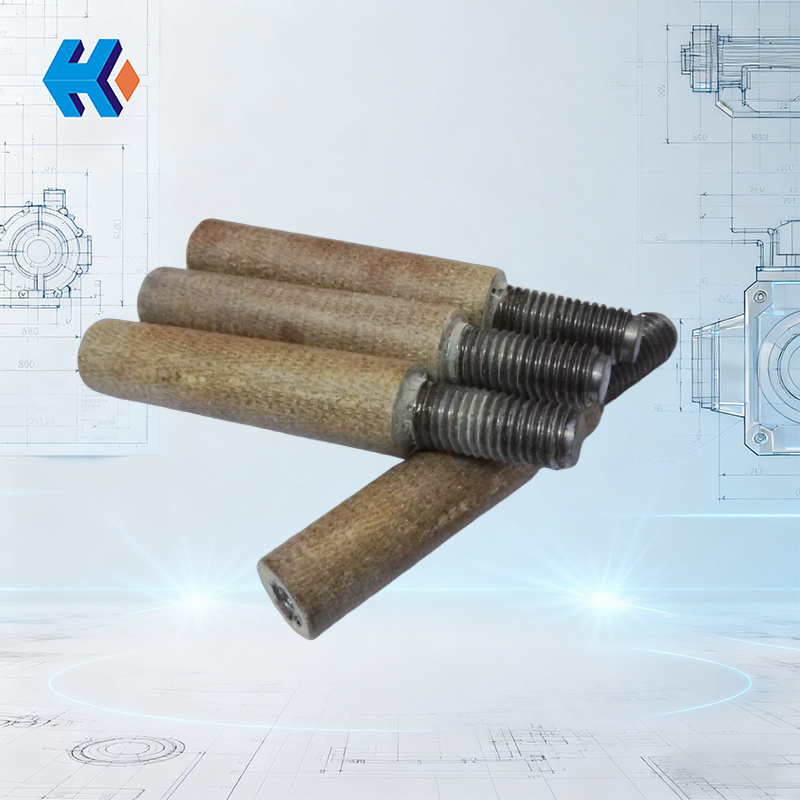

In large-scale power stations (including hydropower stations and thermal power stations with installed capacities of 300MW and above), the insulated taper pin for generators serves as a critical core component to ensure long-term safe and stable operation of generating units—its performance directly impacts the reliability of power supply and the service life of equipment. Below is a detailed breakdown of its specific functions, applicable locations, technical principles, and maintenance requirements in these industries, with a focus on its unique material advantages:
1. Securing Stator Windings
Within the stator winding system of a generator, insulated taper pins are primarily used to fix stator bars in stator slots. Unlike traditional metal fasteners, advanced insulated taper pins adopt a lightweight, high-strength composite material. This ultra-low density reduces the overall weight of the stator assembly by 8–12%, minimizing mechanical stress from vibration while maintaining exceptional structural rigidity. The taper pins are precisely wedged between stator bars and slot walls, effectively preventing bar displacement caused by high-frequency electromagnetic forces or operational vibrations . Additionally, the insulating material (e.g., mica-based composites) in the pins eliminates the risk of arcing between adjacent bars and prevents short circuits, ensuring the winding system operates within safe electrical parameters.
2. High-Voltage Insulation Protection
Insulated taper pins provide critical insulation isolation between the generator's stator and rotor, acting as a "barrier" against high-voltage leakage. Designed to withstand voltage levels of 10kV–50kV (depending on generator rating) and operating temperatures of 150–200℃, these pins prevent high-voltage current from leaking from stator windings to the rotor or grounded components—thus avoiding catastrophic accidents such as inter-turn short circuits or electric shocks. The 3% density material further enhances thermal stability: its low thermal conductivity reduces heat transfer between high-voltage parts, protecting the insulation layer from thermal aging and extending its service life.
3. Signal Transmission and Isolation
Beyond mechanical and insulation functions, insulated taper pins facilitate the transmission of weak current signals with high precision. The non-conductive nature of the 3% density composite material ensures electrical isolation between signal lines and high-voltage components. This design minimizes signal interference from strong electric fields, maintaining signal accuracy within ±0.5%—a critical requirement for real-time monitoring systems that track generator health and trigger early fault alarms.
4. Thermal Management Optimization
Thermal dissipation is a key consideration in the design of insulated taper pins. The internal structure of the 3% density composite pin features a honeycomb-like micro-channel network, which acts as an efficient heat dissipation channel. When the generator operates under full load, the pins conduct heat generated by stator windings to the slot walls and cooling system, reducing the local temperature of stator bars by 8–15℃. This thermal regulation not only prevents insulation degradation due to overheating but also improves the generator's overall efficiency.
5. Applicable Locations
- Stator Slots: Specifically designed for 300MW+ turbo-generators and 50MW+ hydro-generators. The 3% density taper pins fit tightly into slots of 10–30mm width, providing stable mechanical support and insulation resistance ≥10¹²Ω·cm.
- Winding Ends: Used in vertically arranged hydro-generator windings to support end windings and resist mechanical stress from rotor rotation. The lightweight material prevents end winding deformation caused by gravitational pull.
- High-Voltage Lead Connections: Applied at generator terminals connected to GIS systems. The pins provide insulation protection for 25kV–50kV leads, preventing leakage current and ensuring compliance with insulation standards.
6. Technical Principles
The performance of insulated taper pins relies on two core elements: material selection and structural design.
- Material: High-performance glass fiber-reinforced mica composite with a 3% density. This material offers bending strength ≥150MPa and excellent resistance to humidity.
- Structural Design: The taper angle ensures tight wedging in stator slots, while the surface is coated with a wear-resistant layer to reduce friction during installation and operation. The combination of low density and optimized taper geometry achieves both mechanical stability and electrical insulation.
7. Installation and Maintenance
Installation Requirements
- Strictly follow standards: Use torque wrenches to control fastening torque to avoid damaging the 3% density composite material.
- For hairpin winding connections, install slot bottom insulators to prevent axial displacement of the taper pin during assembly.
- Ensure circumferential alignment error ≤0.5mm to maintain uniform insulation performance.
Maintenance Protocols
- Routine Checks: Conduct insulation resistance tests every 6 months and visual inspections for wear, cracks, or material degradation.
- Annual Overhauls: Disassemble and inspect 10% of taper pins (random sampling) to check internal micro-channel blockage and 3% density material integrity.
- Fault Handling: Replace pins immediately if insulation resistance drops by >50% or if mechanical deformation exceeds 0.2mm—delayed replacement can lead to stator winding short circuits, resulting in downtime losses of ~$100,000/day for a 500MW unit.
Optimize Your Generator's Performance Today
Our insulated taper pins—featuring the industry-exclusive 3% ultra-low density composite material—deliver superior insulation, mechanical stability, and thermal management for 300MW+ power stations.
Contact our team now to request a customized quote. Elevate your generator's reliability—start with the right taper pins!