


Generator Seal Ring Hydrogen Leakage: Structural Defects and Technical Analysis for Prevention
Seal Ring Structure and Installation Defects
The structural design and installation quality of the seal ring are core factors affecting the hydrogen sealing effect. Defects primarily manifest in three dimensions: gap control, alignment precision, and tightening process. These directly lead to the failure of the sealing oil film or poor sealing surface fit, causing hydrogen leakage. The analysis below is structured around the "Gap-Alignment-Tightening" logical chain:
I. Excessive Gap: Geometric Deviation Destroys Oil Film Stability
The gap between the seal ring, journal, and seal housing is the foundation for forming a stable sealing oil film, and its value must be strictly controlled within the design range. The standard radial gap is typically 0.20~0.25mm, and the axial gap is 0.45~0.77mm. Exceeding this range directly impacts the oil film's load-carrying capacity. During an overhaul at a power plant, it was found that the seal ring's radial gap had increased to 0.28mm due to long-term wear, leading to the oil film's inability to form an effective sealing barrier, and the hydrogen leakage rate sharply rose to 47m³/d.
In a similar case, the hydrogen leakage rate increased to 28m³/d when the radial gap of the No. 2 unit's seal ring at another power plant reached 0.35mm, confirming the positive correlation between gap size and leakage rate.
A gap that is too small also poses a risk. At a nuclear power plant, due to insufficient clearance between the seal ring and its seat cover during installation (design requirement 0.20~0.25mm), relative rotation occurred during operation, causing wear and black marks on the seal ring's base, further disrupting oil film continuity. Furthermore, geometric deviations such as journal wear grooves and unqualified seal ring ovality exacerbate uneven gap distribution, creating local "short-circuit" channels that allow hydrogen to leak rapidly along the gaps.
II. Poor Alignment: Chain Reaction of Installation Positioning Deviation
The alignment precision of all components in the sealing system directly affects the sealing surface fit. Installation misalignment or positioning deviation will trigger systemic hydrogen leakage risks. Misalignment of the generator end cover, intermediate ring, and seal ring will cause steps or gaps in the sealing surface, compromising overall fit. During the trial run of the seal oil system for a 660MW ultra-supercritical unit, the elevation difference between the expansion tank and the air extraction tank was only 150mm (design requirement ≥380mm), leading to poor oil return, preventing the hydrogen-side sealing oil from effectively forming a pressure barrier. Poor shaft line alignment can also indirectly aggravate wear. During the installation of a 350MW unit, the number of stepped shims reached 12~15 layers (design requirement ≤3 layers). Uneven shim compression during operation caused the shaft line elevation to drop by 0.15mm, leading to eccentric wear of the seal ring, and the radial gap increased from the initial acceptance of 0.25mm to 0.28mm. Moreover, if the axial gap between the seal ring and the journal is not controlled within the 0.45~0.77mm range, it may cause block movement during operation, further destabilizing the oil film.
III. Tightening Defects: Direct Leakage Path from Process Non-Compliance
The tightening process of the seal ring assembly is key to ensuring the sealing surface fit, and improper operation can directly form leakage paths. Standard practice requires using a torque wrench to tighten bolts in a diagonal sequence to ensure uniform force on the joint surface. However, actual cases often show issues like uneven bolt tightening (e.g., tightening vertical bolts first causing seat deformation), shim damage (e.g., cracks up to 6mm long in the shim between the seal ring seat and the end cover joint surface), or excessive layers of stepped shims, resulting in steps of 0.05~0.1mm on the sealing surface. Hydrogen leaks along these gaps. A typical case is the seepage event at the hydrogen-side oil return window flange of the steam-side seal ring on #1 generator at a power plant: the flange bolts were not tightened according to torque requirements, leading to local widening of the joint surface gap. 0.39MPa hydrogen was ejected through the seepage point, ultimately causing the oil return window mirror to rupture. Furthermore, if the 0.20~0.25mm installation gap between the seal ring and the seal housing cover is not maintained, metal contact and wear can occur during operation, creating new leakage channels.
Key Control Points:
- Gap Control: Radial gap 0.20~0.25mm, axial gap 0.45~0.77mm, ovality error ≤0.02mm.
- Alignment Precision: Concentricity of journal and seal ring ≤0.03mm, number of stepped shims ≤3 layers.
- Tightening Standard: Use a torque wrench for diagonal tightening, bolt pre-tightening force deviation ≤5%, shims free from cracks and burrs.
The correlation of structural and installation defects indicates that hydrogen leakage prevention requires establishing a full-process control system encompassing "Design Standard - Installation Process - Operation Monitoring" to eliminate potential leakage channels through geometric precision control and standardized operations.
Key Technical Measures for Preventing Seal Ring Hydrogen Leakage
I. Optimized Seal Structure Design
Optimized seal structure design focuses on "contact area - oil film stability - self-adaptation capability" as core objectives. Through the collaborative application of sealing element innovation, oil film control upgrades, and dynamic gap adjustment technology, the reliability and durability of the generator hydrogen sealing system are significantly enhanced.
Through "Pressure - Cleanliness - Flow" synergistic control technology, the hydrogen leakage rate of the seal rings for a 600MW unit group in a power generation group was reduced from 12m³/d before modification to 3.5m³/d, reducing annual hydrogen consumption by approximately 3000m³. Simultaneously, the average seal ring replacement cycle was extended to more than 6 years, and overall operation and maintenance costs were reduced by 42%.
II. Online Monitoring and Early Warning Technology
Online monitoring and early warning technology for generator seal ring hydrogen leakage establish a "point-line-surface" multi-dimensional monitoring system, enabling early identification and precise localization of hydrogen leakage risks. This system integrates hydrogen concentration sensing, oil film status monitoring, and temperature field visualization technology, forming a three-dimensional prevention and control network covering the full operating status of the seal ring.
III. Point Monitoring: Real-time Hydrogen Concentration Sensing
Point monitoring is centered on nanotube bundle sampling - metal platinum hydrogen sensitive sensors. By deploying high-sensitivity detection units at critical locations such as the seal ring and internal cooling water tank, rapid capture of hydrogen leakage is achieved. This sensor uses a nanotube bundle sampling head, with an oil/water separation capability more than 10 times that of traditional hydrogen permeable membranes, allowing it to directly sample hydrogen gas in pressurized oil and water environments. The metal platinum hydrogen sensitive element utilizes the heat generated by the oxidation reaction of hydrogen and oxygen on the platinum wire surface, detecting concentration through resistance change. The detection sensitivity reaches 0.1%Vol, response time is <10s, and it exhibits good linearity with minimal interference from temperature and humidity. When applied to #3 generator at a power plant, the sensor positioned at the seal ring provided a 3-hour advance warning of the leakage risk, securing a critical time window for maintenance.


-
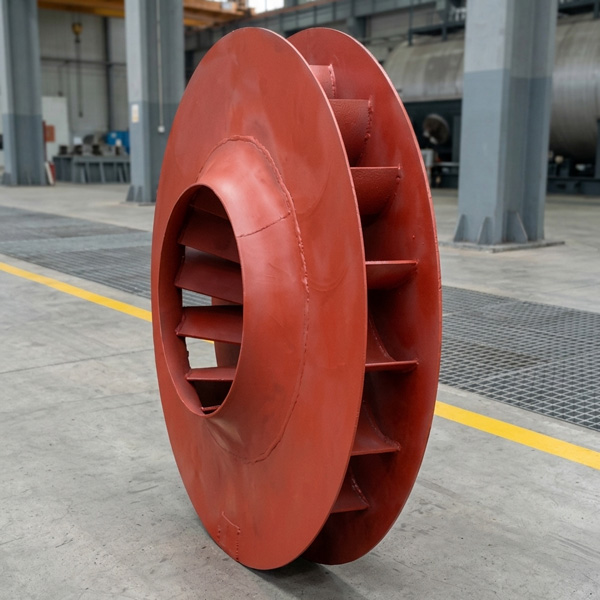
Looking at Abnormal Wear on U250-Y01 Induced Draft Fan Moving Blades
Understand why U250-Y01 induced draft fan blades wear out and how to maintain mechanical linkages. We provide U250-Y01 blades, seals, and connecting rods.03-23
-
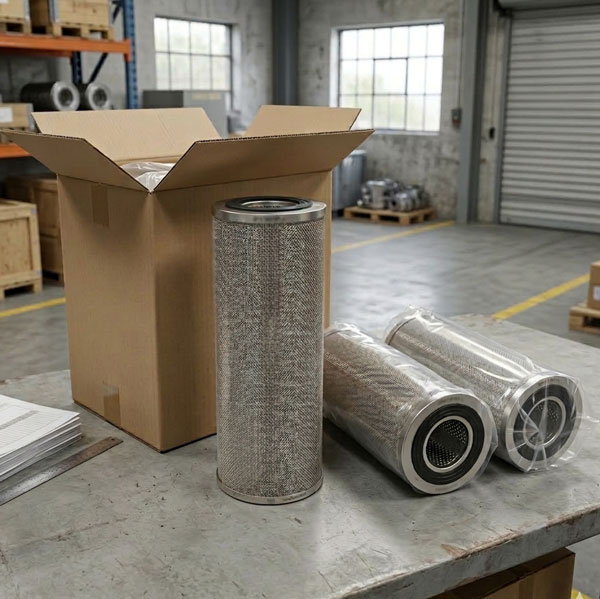
Easy Maintenance with the SDGLQ-60T-36K Duplex Oil Filter for Coal Mills
Learn how to switch the SDGLQ-60T-36K duplex filter element without stopping your coal mill. No oil flow interruption, stable pressure, and zero bypass. Get a quote today.03-17
-
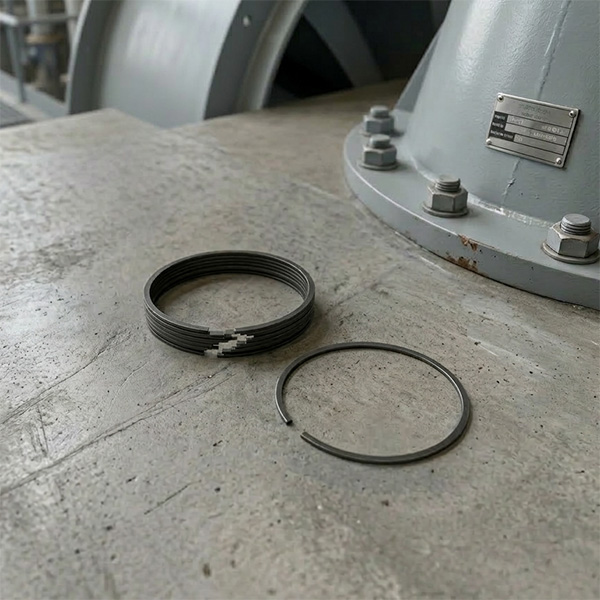
Keeping Your ID Fan Safe with the U2616G2106Y01 Blade Seal Ring
Protect your HU25042-221G fan with the U2616G2106Y01 blade seal ring. Learn how multi-stage sealing prevents bearing jams, blade sticking, and fan stalls.03-12
-
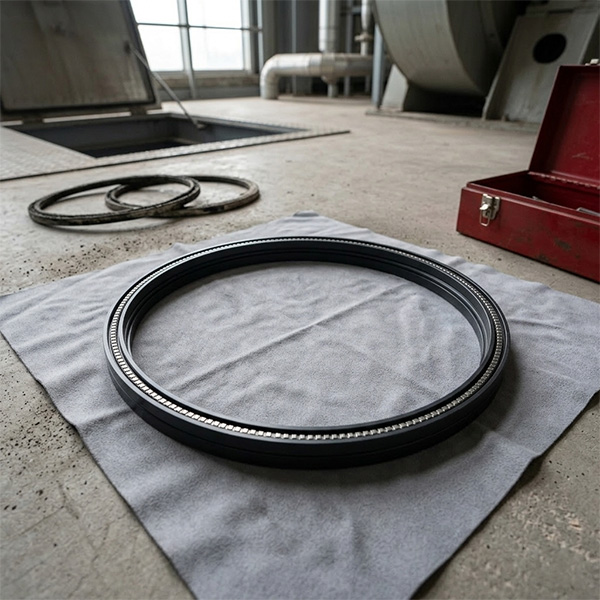
Stopping Oil Leaks with the UYG35/20G010 ID Fan Seal Ring
Stop bearing box leaks with the UYG35/20G010 ID fan seal ring. Learn how gap control and thermal expansion prevent grip failure in induced draft fan spare parts.03-11
-
How to Detect Micro Leakage in Feed Water Pump Gasket FA1D56-03-09 Before It Causes Shutdown
Learn the common failure modes of feed water pump cooling water jacket sealing gasket FA1D56-03-09, including aging, creep relaxation, and mechanical damage. Understand external signs, micro leakage detection methods, and practical maintenance tips to prevent pump shutdown and reduce repair cost.03-02


