


Optimizing ZGM Pulverizer Scraper Performance: Solutions for Model 20MG40.11.07.01.01
Optimizing ZGM Pulverizer Scraper Performance: Solutions for Model 20MG40.11.07.01.01
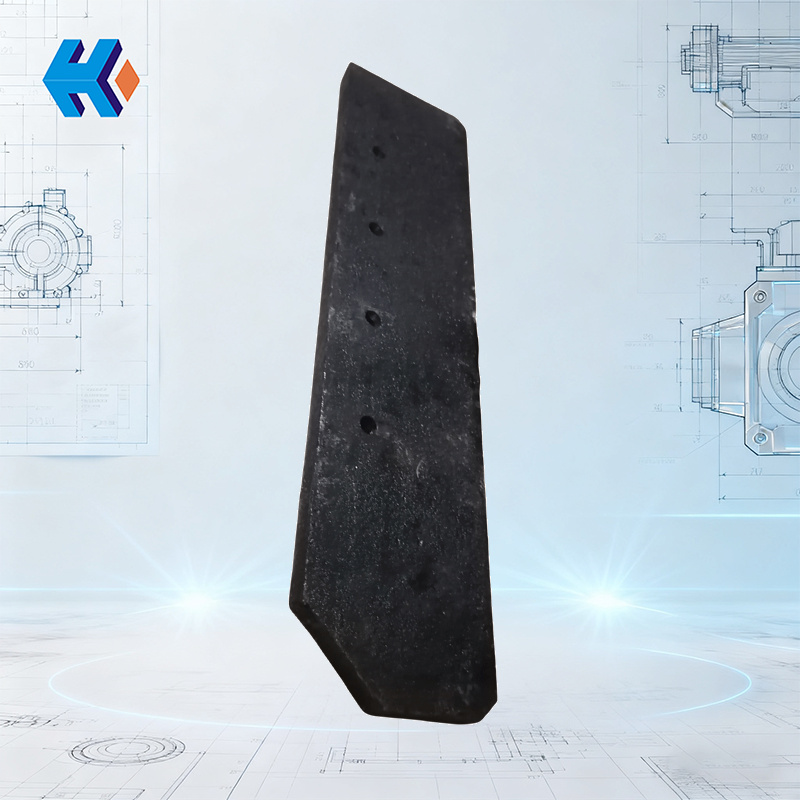
The scraper assembly (Part No. 20MG40.11.07.01.01) in the coal pulverizer is a critical component for guiding pyrites (coal rejects/tramp iron). Its malfunction directly compromises milling system stability. In practical operation, this scraper frequently exhibits three main issues—abnormal noise in the scraper chamber, incorrect gap adjustment between the scraper and base plate, and excessively small scraper device clearance—all of which lead to accelerated wear of the scraper and liner plates.
We have implemented several engineering improvements to proactively prevent these failures.
I. Abnormal Noise in the Scraper Chamber
Abnormal noise often signals scraping or rubbing between components, leading to rapid wear.
(I) Causes of Noise
- Damaged Liner Plate: Prolonged stress or wear can cause the scraper chamber liner plate to deform and warp. If not thoroughly corrected during overhaul, the rotating pyrites scraper will constantly rub against the warped liner, generating noise and potentially damaging the scraper itself.
- Improper Gap Adjustment: If the scraper clearance is measured and adjusted based on a single point only, the clearance may be set too small at other points, causing the scraper to rub against the liner during rotation and creating noise.
(II) Control Measures
- Liner Plate Overhaul Protocol: If liner plate deformation is detected, all pyrites (debris) must be completely cleaned from the liner plate sandwich before welding, as residual material affects weld quality. The liner plate must then be repositioned and re-welded.
- Liner Plate Straightening: Before re-welding, any warped sections of the liner plate must be professionally straightened and returned to their original position to prevent misalignment and rubbing after welding.
- Accurate Gap Measurement: When adjusting the pyrites scraper gap, the equipment must be manually rotated for at least two full turns. The clearance at various points must be checked to ensure the minimum clearance point does not result in rubbing, before finalizing the optimal setting.
(III) Scraper (20MG40.11.07.01.01) Engineering Improvements
- Material Upgrade for Liner Plates: The liner plate material has been upgraded to a more wear-resistant and deformation-resistant alloy. This significantly reduces the likelihood of liner warping, extending its service life and minimizing noise caused by deformation.
- Precision Clearance Measurement Tool: We have developed a specialized tool for rapid, multi-point clearance measurement. This tool provides quicker and more accurate readings than manual measurement, preventing setting errors due to human inaccuracy.
II. Optimizing the Gap Between Scraper and Base Plate
Correct gap setting is essential for efficient pyrites removal and minimizing friction.
(I) Causes of Incorrect Adjustment
- Base Plate Thermal Deformation: During long-term operation, the scraper chamber base plate is exposed to high-temperature primary air, leading to thermal deformation and unevenness.
- Neglect of Deformation Data: The base plate's deformation is often not measured or accounted for when setting the scraper-to-base plate clearance. This results in non-standard clearance and subsequent rubbing.
(II) Control Measures
- Base Plate Deformation Measurement: During maintenance, specialized tools must be used to accurately measure the entire base plate deformation profile. The data on maximum deformation must be recorded to guide subsequent gap adjustment.
- Reference Datum Adjustment: The clearance between the scraper and base plate should be calculated and adjusted using the highest point of the base plate deformation as the reference datum, ensuring the clearance meets operational standards and prevents rubbing, even with existing plate deformation.
(III) Scraper (20MG40.11.07.01.01) Engineering Improvements
- Enhanced Base Plate Cooling: Heat dissipation fins (ribs) have been added to the base plate design. Improved cooling mitigates the effects of high-temperature primary air, significantly reducing base plate thermal deformation.
- Laser Scanning System: A laser scanning system is now used to quickly and precisely map the base plate's deformation data. The system can automatically generate a clearance adjustment plan referenced to the highest deformation point, guiding technicians to accurate settings and eliminating errors caused by manual oversight of deformation.
III. Addressing Excessively Small Scraper Device Clearance
Small gaps lead to high friction and potential damage from foreign material.
(I) Causes of Restricted Clearance
- Incorrect Initial Setting: The initial clearance for the pyrites scraper assembly is set smaller than the design requirement. This causes constant rubbing between the scraper and liner plate during operation, leading to noise and rapid wear.
- Foreign Object Entrapment: Ferrous foreign objects (tramp iron) entering the mill can easily become lodged in the small gap between the scraper and liner plate. The resulting impact force during operation severely increases wear, often leading to damage to the bottom liner plate.
(II) Control Measures
- Increased Gap Setting: When adjusting the pyrites scraper assembly clearance, set the value to be 1.5 larger than the design specification. This provides sufficient space for normal pyrites discharge while accommodating operational tolerances and foreign object passage.
- Post-Adjustment Inspection: After setting the gap, manually rotate the assembly to check the fit between the scraper, base plate, and liner plate. If the scraper rubs against the outermost circumference, the scraper’s bevel edge must be ground down until contact is eliminated.
(III) Scraper (20MG40.11.07.01.01) Engineering Improvements
- Automatic Gap Adjustment Device: The scraper assembly has been fitted with an automatic clearance adjustment device. This system monitors operational conditions and wear rates to maintain an optimal gap automatically, preventing issues from incorrect initial settings or subsequent wear.
- Foreign Object Detection and Ejection System: A detection and ejection system has been installed. Upon detecting ferrous foreign objects near the scraper/liner gap, the system automatically ejects the material, preventing jamming and severe component damage, thereby ensuring stable operation of the scraper assembly.
HKZX-2025-10-29


-
Looking at Abnormal Wear on U250-Y01 Induced Draft Fan Moving Blades
Understand why U250-Y01 induced draft fan blades wear out and how to maintain mechanical linkages. We provide U250-Y01 blades, seals, and connecting rods.03-23
-
Easy Maintenance with the SDGLQ-60T-36K Duplex Oil Filter for Coal Mills
Learn how to switch the SDGLQ-60T-36K duplex filter element without stopping your coal mill. No oil flow interruption, stable pressure, and zero bypass. Get a quote today.03-17
-
Keeping Your ID Fan Safe with the U2616G2106Y01 Blade Seal Ring
Protect your HU25042-221G fan with the U2616G2106Y01 blade seal ring. Learn how multi-stage sealing prevents bearing jams, blade sticking, and fan stalls.03-12
-
Stopping Oil Leaks with the UYG35/20G010 ID Fan Seal Ring
Stop bearing box leaks with the UYG35/20G010 ID fan seal ring. Learn how gap control and thermal expansion prevent grip failure in induced draft fan spare parts.03-11
-
How to Detect Micro Leakage in Feed Water Pump Gasket FA1D56-03-09 Before It Causes Shutdown
Learn the common failure modes of feed water pump cooling water jacket sealing gasket FA1D56-03-09, including aging, creep relaxation, and mechanical damage. Understand external signs, micro leakage detection methods, and practical maintenance tips to prevent pump shutdown and reduce repair cost.03-02


