


Don't Underestimate The FA1D56-03-21 Sealing Washer — Guardian for Booster Pumps
In the day-to-day operation and maintenance (O&M) of the FA1D56-type booster pump at a power plant, there are always these "small parts with big jobs"—and the FA1D56-03-21 Copper Sealing Washer is one of them. This unassuming copper ring is installed at the pump body's sealing spot, yet it's the key to holding back high-pressure medium leakage, teaming up with other parts to prop up the entire sealing system.
If this tiny ring fails, the best-case scenario is a shutdown for replacement; the worst-case involves messing up the boiler feedwater supply. That's why the plant techs always treat it as a "must-check item" during maintenance.
I. This Copper Ring Isn't Basic: It's "Tailor-Made" for the FA1D56 Booster Pump
The FA1D56-03-21 washer is not just any copper shim; it's a specific seal component designed only for the FA1D56 booster pump. It uses high-purity red copper and goes through a special annealing process, making it softer to the touch than standard copper but with better ductility—and that's the secret to its sealing power.
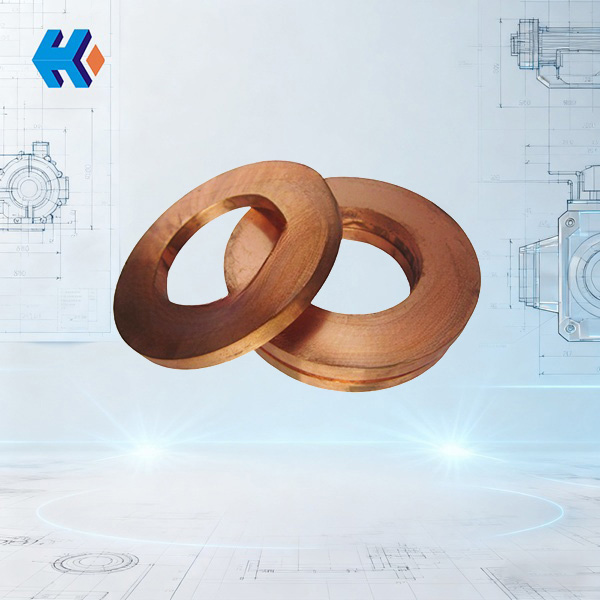
During installation, it can "deform and conform" to the tiniest irregularities on the sealing surface, tightly blocking any medium leakage points.
It's not working alone in the booster pump's sealing system. It has to coordinate with the Seal Casing (FA1D56-03-03) to lock its position and form a "dual defense" with the Gasket (FA1D56-03-09). Even the fasteners like studs and cap nuts must be the perfect size to match it, or the pressure won't hold, and it will leak.
Real Incident: One plant tried to cut corners and used a general copper washer. Less than three months later, medium seepage occurred. They tore it down and found the generic washer's edge had been crushed and warped due to a slight size difference. They only fixed the problem after switching back to the proper FA1D56-03-21.
II. Red Copper + Precision Process: The Washer's "Solid Strength"
Why does the FA1D56-03-21 manage to "hold its ground" in a power plant? The key is that its technical features address O&M pain points, with every specification tailored for the booster pump's operating conditions.
1. Red Copper Material Comes with a "Buff," Suited for Complex Plant Environments
The inherent properties of red copper are perfect for power plants:
- Non-magnetic: Won't cause interference in strong magnetic fields near generators.
- High thermal conductivity: Quickly dissipates heat from the sealing area, preventing localized overheating.
- Corrosion-resistant: Resists rust even with trace impurities in feedwater.
- Anti-static: Prevents static buildup from friction between medium and metal.
All these traits combined make it far more durable in a power plant than generic washers.
2. Annealing Process "Boosts" It: The Perfect Softness for Sealing
This washer undergoes rigorous annealing before leaving the factory, resulting in a hardness between HB35 and HB45—soft enough to deform and conform to the seal face, but not so soft that it crushes instantly under pressure.
When the techs install it, as long as they tighten the bolts to the standard torque, it will "grout" itself into the texture of the sealing surface, blocking even microscopic gaps invisible to the naked eye.
Key Benefit: Annealing relieves internal stresses in the copper, making it less prone to cracking over time and extending its lifespan by more than double compared to unannealed washers.
3. Dimensions Are Tightly Controlled: A "Seamless Fit" with Fasteners
The dimensional tolerance of the FA1D56-03-21 is controlled within ±0.05 mm—thinner than a strand of human hair. This guarantees a perfect partnership with the Stud Bolts (FA1D56-03-19/20) and Cap Nut (FA1D56-03-18).
The bolt goes through without wiggling, and when the nut is tightened, the pressure is evenly distributed across the washer, preventing cracking or leakage.
Technician Feedback: "With this specific washer, you don't have to file it down—you just grab it and install it, saving tons of hassle."
III. Teamwork is Key: The Washer's "Partners" Checklist
The FA1D56-03-21 needs a team of components to achieve maximum effect; none can be missing. The table below clearly lists its core "partners" for techs to check during maintenance:
| Part Model | Part Name | Coordinated Function with FA1D56-03-21 Washer | Applicable Scenario |
|---|---|---|---|
| FA1D56-03-03 | Seal Casing | Fixes the washer's position, forms the sealing chamber, prevents washer shift | Booster Pump Seal System Assembly |
| FA1D56-03-09 | Gasket | Forms a "Dual Seal" with the washer, strengthening the anti-leak effect | High-Pressure Medium Sealing Area |
| LTJ-8B1D-FA1D56 | Mechanical Seal | Washer assists in sealing the stationary ring area, reducing its stress | Shaft End Sealing System |
| FA1D56A-A1GB-10700-00 | Thrust Bearing | Maintains pump shaft stability, prevents shaft wobble that could misalign the washer seal face | Booster Pump Drive System |
| FA1D56-03-14/19/20 | Booster Pump Stud Bolt | Works with cap nut to compress washer, ensuring even stress distribution | Sealing Component Fastening |
| FA1D56-03-18 | Cap Nut | Works with stud bolt to compress washer, preventing loosening and leakage during operation | Sealing Component Fastening |
IV. Three Scenarios Where You Absolutely Must Use This Washer
The FA1D56-03-21 has a high "utilization rate" in power plants, especially in the three scenarios below—you really can't do without it.
1. Routine Maintenance: Replace It to Be Sure
Every time the booster pump undergoes planned maintenance, techs remove and inspect the old FA1D56-03-21. Even if it looks fine, they replace it with a new one if it's been used for more than 18 months.
Lesson Learned: One plant once thought the old washer was good enough and didn't change it. Six months later, medium slowly started seeping from the seal face. They had to shut down anyway to replace it, losing generation time. Now, this washer is a "mandatory replacement" during their overhauls, giving them peace of mind.
2. Emergency Repair: Relies on It to Buy Time
If the booster pump suddenly leaks and shuts down, the FA1D56-03-21 is the "emergency hero."
Emergency Case: A plant's booster pump seal failed late at night. Techs found the washer had aged and cracked. Luckily, they had the FA1D56-03-21 in stock. They replaced it, tightened the bolts, and the pump was back online in less than two hours. Without it, they would have been down for half a day, incurring massive losses.
3. Technical Upgrade: Don't Skimp on the Basic Seal
Some plants upgrade the FA1D56 booster pump for energy savings—e.g., installing a new mechanical seal. Even then, they switch to the FA1D56-03-21.
The new mechanical seal often demands higher quality sealing surfaces, and this washer's high precision and sealing capability perfectly match the need, ensuring it doesn't drag down the upgrade's performance.
Upgrade Result: One plant, after an upgrade using this washer, achieved near-zero leakage, with great results.
V. Choosing the Right Supplier Means Peace of Mind
Even though the FA1D56-03-21 is a small part, you must source it from a professional supplier, like Dongfang SRI. Their washers are made according to power industry standards, with sufficient red copper purity and proper annealing. You can use it right out of the box without needing your own material checks.
Plus, they can supply all the "partners" too—the seal casing, bolts, etc.—as a complete package, saving you from chasing parts all over the place.
If you have special needs, they even offer technical support, helping confirm dimensions or guiding installation, which is super convenient for plant techs.
The truth is, many small parts in a power plant are like the FA1D56-03-21: they look insignificant but are crucial for equipment stability. Selecting and using these small parts correctly is what keeps the booster pump running smoothly with fewer failures. If your plant uses the FA1D56 booster pump, next time you're doing maintenance, pay extra attention to this copper ring—reliable small parts genuinely save you from a lot of big trouble.
HKCYT-2025-10-28


-
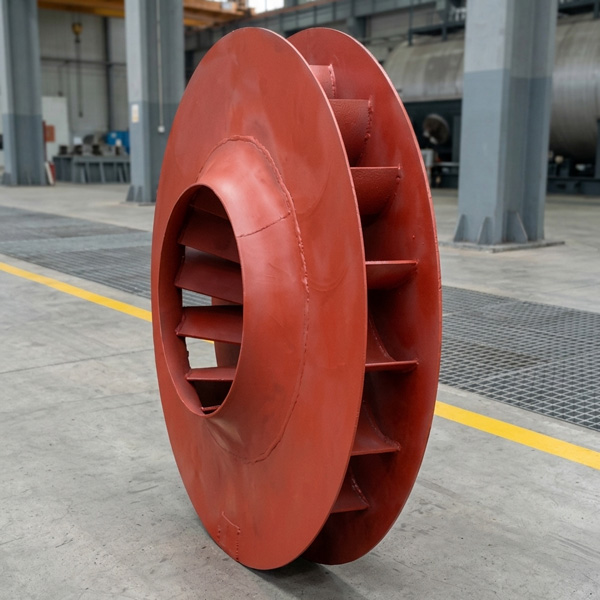
Looking at Abnormal Wear on U250-Y01 Induced Draft Fan Moving Blades
Understand why U250-Y01 induced draft fan blades wear out and how to maintain mechanical linkages. We provide U250-Y01 blades, seals, and connecting rods.03-23
-
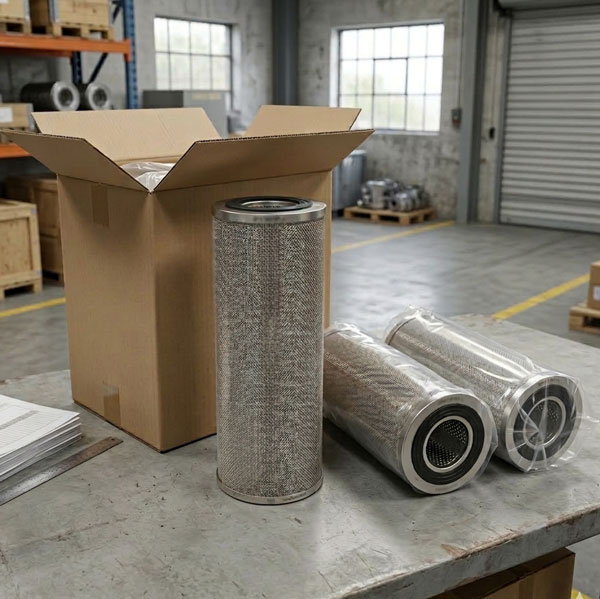
Easy Maintenance with the SDGLQ-60T-36K Duplex Oil Filter for Coal Mills
Learn how to switch the SDGLQ-60T-36K duplex filter element without stopping your coal mill. No oil flow interruption, stable pressure, and zero bypass. Get a quote today.03-17
-
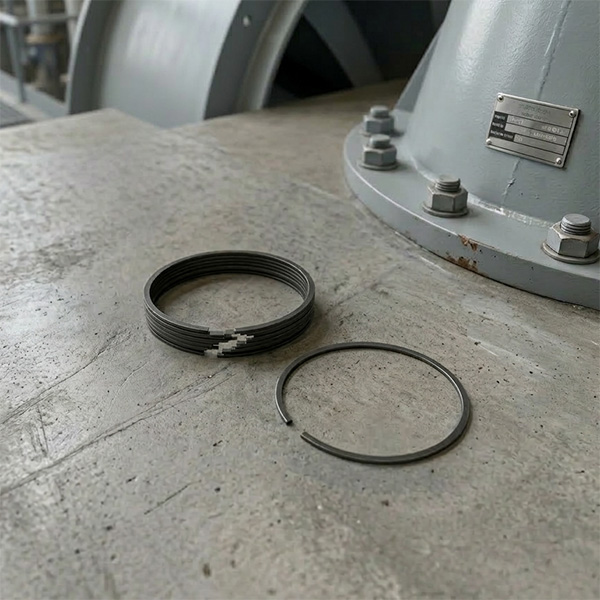
Keeping Your ID Fan Safe with the U2616G2106Y01 Blade Seal Ring
Protect your HU25042-221G fan with the U2616G2106Y01 blade seal ring. Learn how multi-stage sealing prevents bearing jams, blade sticking, and fan stalls.03-12
-
Stopping Oil Leaks with the UYG35/20G010 ID Fan Seal Ring
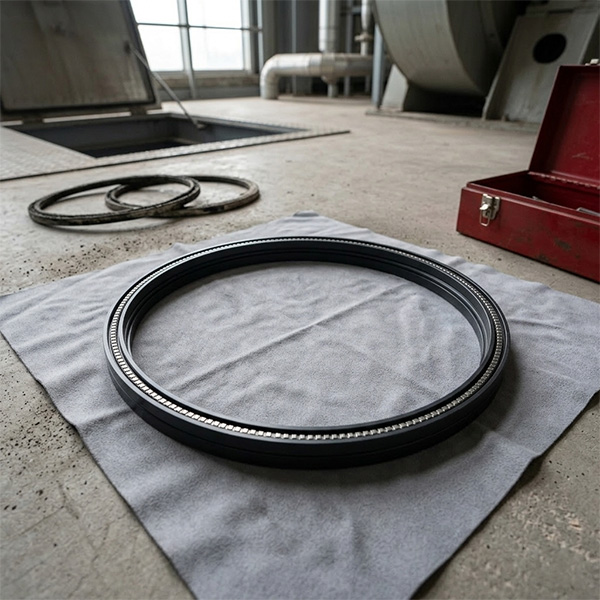
Stop bearing box leaks with the UYG35/20G010 ID fan seal ring. Learn how gap control and thermal expansion prevent grip failure in induced draft fan spare parts.03-11
-
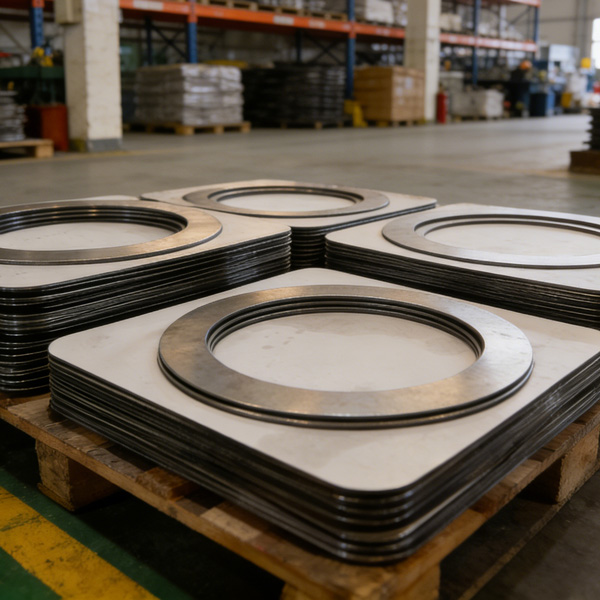
How to Detect Micro Leakage in Feed Water Pump Gasket FA1D56-03-09 Before It Causes Shutdown
Learn the common failure modes of feed water pump cooling water jacket sealing gasket FA1D56-03-09, including aging, creep relaxation, and mechanical damage. Understand external signs, micro leakage detection methods, and practical maintenance tips to prevent pump shutdown and reduce repair cost.03-02


