


The Critical Sealing Role of the FA1D56-03-24 Copper Gasket
At power plants operating the FA1D56 booster pump, technicians often say: "The seal depends on the gasket." Many common leakage issues in booster pumps are not major problems, but are caused by an inconspicuous sealing gasket. The component we are discussing today is the FA1D56-03-24 Copper Gasket—the Key Player in the FA1D56 booster pump's sealing system. Though it is just a thin piece of copper, it securely locks in boiler feedwater and deaerated water. Choosing or using it incorrectly can lead to minor losses like wasted fluid, or major costs like unit shutdown and overhaul.
I. This Copper Gasket Is Not Simple: "Custom-Made" for the FA1D56 Booster Pump
The FA1D56-03-24 gasket is not a generic copper washer bought at a hardware store; it is a seal specifically designed for the FA1D56 booster pump. It is made of high-purity copper and undergoes softening and annealing treatment—it feels softer than standard copper but has excellent toughness. It acts like a "pliable seal," able to conform to the tiny textures of the sealing face, blocking small, invisible gaps.
A power plant previously tried to simplify maintenance by using a generic copper gasket instead of the FA1D56-03-24. After six months of booster pump operation, deaerated water started to leak. Disassembly revealed the generic gasket had a dimensional error of 0.03 mm, causing the edges to be pressed out of shape and crack, allowing the medium to seep through. Switching to the genuine specification FA1D56-03-24 resolved the leakage problem permanently. This highlights the value of a dedicated component: its size and hardness are perfectly matched to the FA1D56 pump's sealing interface, requiring no secondary grinding—it's ready to install, saving significant hassle.
Moreover, it boasts strong compatibility; it can be used not only on the base FA1D56 booster pump but also on the upgraded FA1D56A series. This means the power plant doesn't need to stock different gaskets for different pump models, simplifying inventory management.
II. Three "Hard Strengths": Why It's the Technician's "Trusted Choice"
Why does the FA1D56-03-24 stand out among various sealing components? Because its technical design directly addresses the practical needs and pain points of power station operation and maintenance.
1. Copper Material: Perfect Hardness for "Clinging" to the Sealing Face
The high-purity copper used in this gasket has a hardness of less than or equal to 60 HB after annealing treatment—it is soft enough to deform under bolt pressure, filling tiny pits and cracks on the sealing surface. Yet, it is not so soft that it crushes easily, allowing it to maintain its sealing shape long-term. Furthermore, copper offers excellent corrosion resistance; even if the boiler feedwater or deaerated water contains trace impurities, it will not be easily corroded.
2. Precise Dimensions: Minimal Error, No Secondary Machining Required
Manufactured using a precision die-cutting process, the dimensional tolerance is controlled to within +/- 0.02 mm—finer than a human hair. The inner diameter, outer diameter, and thickness align perfectly with the FA1D56 pump's sealing groove. During installation, technicians don't need to use files or sandpaper; the gasket fits directly over the bolt holes. Once tightened, the pressure is distributed evenly across the entire sealing face, preventing local over-compression and cracking or under-compression and leakage.
The surface is also passivated, which not only resists oxidation and rust but also reduces the friction coefficient during installation, preventing scratches to the pump body's sealing face. This is vital for protecting the pump's precision components.
3. Strong Durability: Synchronized with Overhaul Cycles, Less Trouble
Designed with the booster pump's operating cycle in mind, it can perform stably for over 3 years under normal conditions, perfectly aligning with the power plant's major overhaul schedule—eliminating the need for mid-cycle replacement and reducing unplanned downtime. Even with frequent unit start-ups and shutdowns, where medium temperature fluctuates from ambient to 165 degrees C and pressure varies up to 4 MPa, the gasket expands and contracts along with the temperature change, preventing warping or leaking due to thermal stress.

III. Gasket "Partners": Components That Must Be Used Together
The FA1D56-03-24 gasket does not work in isolation; it requires cooperation with other components to achieve maximum sealing effect. The table below lists its essential "partners" for technicians to use during overhaul preparation:
| No. | Part Model | Part Name | Synergy with FA1D56-03-24 Gasket | Applicable Location |
|---|---|---|---|---|
| 1 | FA1D56-03-14 | Booster Pump Double-End Stud | Works with the nut to compress the gasket, ensuring uniform sealing face pressure and preventing local seepage. | Pump Body and End Cover Connection |
| 2 | FA1D56-400 | Mechanical Seal | Forms a "dual seal" with the gasket; the mechanical seal prevents shaft end leakage, and the gasket prevents flange leakage. | Booster Pump Shaft End and Flange Sealing System |
| 3 | FA1D56A-03-09 | Sealing Component | Assists the gasket in sealing the gap between the impeller and the pump body, strengthening overall sealing. | Impeller FA1D56A-01 Sealing Interface |
| 4 | FA1D56-D1-05 | Drive End Shaft Sleeve | The gasket seals the gap between the shaft sleeve and the pump body, preventing medium from infiltrating the sleeve interior. | Drive End Shaft Sleeve Sealing Area |
| 5 | FA1D56-03-15 | Oil Gauge Cover | The gasket fills the gap between the cover and the pump body, preventing lubricating oil leakage from the cover. | Oil Gauge Installation Sealing Area |
IV. Three Scenarios Where This Gasket Is Mandatory
The FA1D56-03-24 sealing gakset has a very high "appearance rate" in power stations, especially in the following three situations, where it is absolutely essential.
1. Rated Operation: Locking Fluid, Maintaining Efficiency
During normal booster pump operation, where medium temperature is less than or equal to 165 degrees C and pressure is less than or equal to 4 MPa, this gasket installed at the pump body/end cover and impeller sealing interfaces securely locks in the boiler feedwater and deaerated water. If the gasket fails, leakage wastes energy and negatively affects the pump's flow rate and head, slowing down the entire power station's water-steam cycle.
2. Unit Start/Stop: Handling Fluctuations, Preventing Leaks
During unit start-up or shutdown, medium temperature and pressure fluctuate significantly, causing thermal expansion and contraction at the sealing face. This is where the FA1D56-03-24 excels—copper’s good thermal conductivity allows for uniform temperature increase at the sealing face, preventing cracking due to localized temperature differences. Its excellent plasticity allows it to adjust to the sealing face's deformation, preventing leakage issues like "warping during expansion and shrinking during contraction."
3. Major Overhaul: Mandatory Replacement Spare, Saving Time
This gasket is a mandatory replacement part during every major overhaul of the FA1D56 booster pump. Technicians replace the old gasket with a new gasket FA1D56-03-24, even if the old one appears intact—because years of use cause material aging, and re-using it risks leakage. Its precise dimensions mean no time is wasted on adjustments during replacement; it can be tightened immediately, shortening overhaul time and allowing the pump to return to service sooner.
V. Choosing the Right Gasket is Key: Professional Suppliers are Crucial
Although the gasket FA1D56-03-24 is a small component, it is vital to source it from a professional spare parts supplier. Their products are manufactured in strict accordance with the FA1D56 booster pump's maintenance standards, ensuring high copper purity and minimal dimensional error. They can also provide complete sets of matching components, such as double-end studs and sealing parts, eliminating the need to source parts from multiple vendors.
A power plant once purchased counterfeit gaskets from a non-professional source, resulting in a 0.05 mm dimensional error that caused continuous leakage. The problem was only solved after switching to a genuine supplier's product. Therefore, when selecting a gasket, technicians should not look only at the price but at the quality—choose products that comply with the GB standard and can provide test reports. This ensures the booster pump runs smoothly with fewer failures.
Ultimately, the FA1D56-03-24 is a component that lives up to the saying: "small part, big responsibility." It solves a major sealing problem for the booster pump, stabilizing the entire power station's feedwater system. The next time you maintain the FA1D56 booster pump, be sure not to overlook this "Sealing Key Player"!
HKCYT-2025-10-30


-
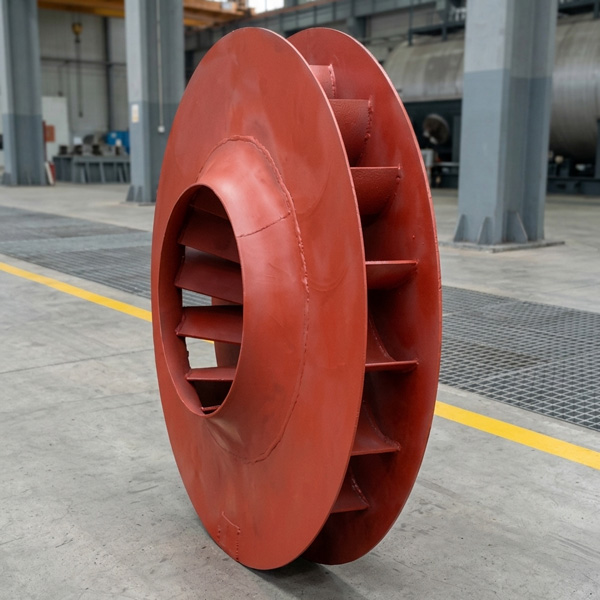
Looking at Abnormal Wear on U250-Y01 Induced Draft Fan Moving Blades
Understand why U250-Y01 induced draft fan blades wear out and how to maintain mechanical linkages. We provide U250-Y01 blades, seals, and connecting rods.03-23
-
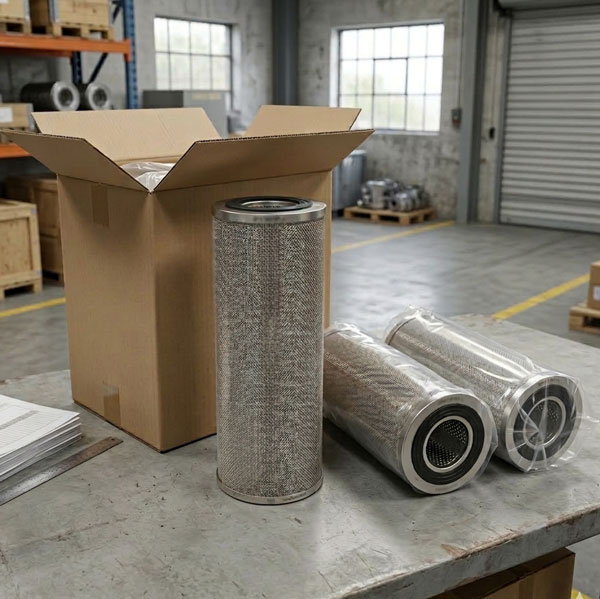
Easy Maintenance with the SDGLQ-60T-36K Duplex Oil Filter for Coal Mills
Learn how to switch the SDGLQ-60T-36K duplex filter element without stopping your coal mill. No oil flow interruption, stable pressure, and zero bypass. Get a quote today.03-17
-
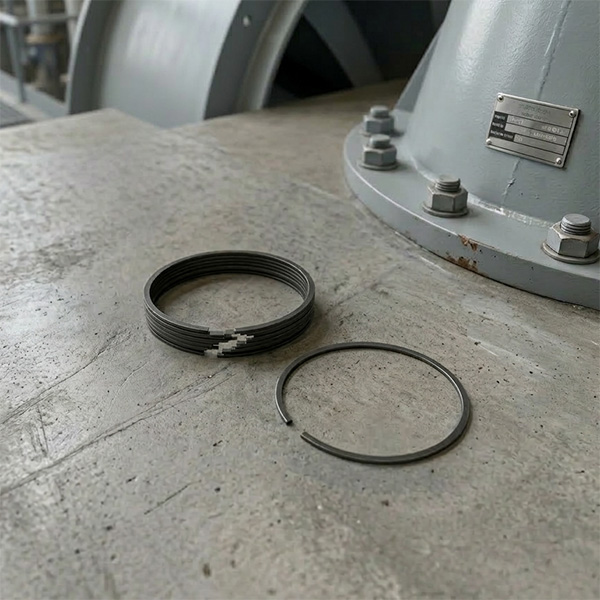
Keeping Your ID Fan Safe with the U2616G2106Y01 Blade Seal Ring
Protect your HU25042-221G fan with the U2616G2106Y01 blade seal ring. Learn how multi-stage sealing prevents bearing jams, blade sticking, and fan stalls.03-12
-
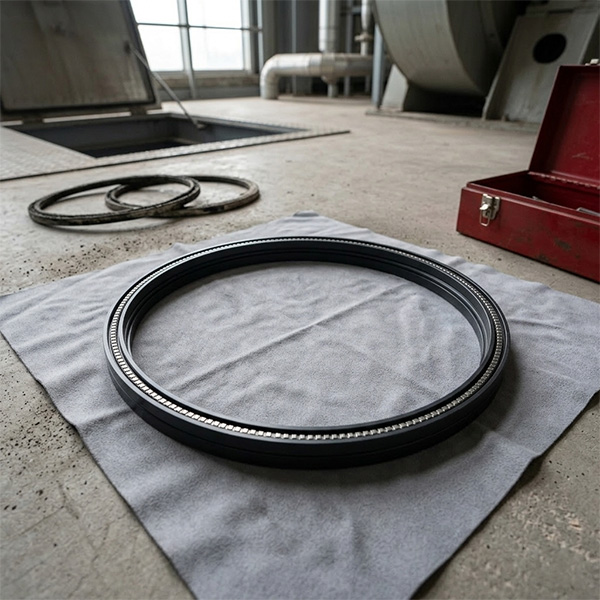
Stopping Oil Leaks with the UYG35/20G010 ID Fan Seal Ring
Stop bearing box leaks with the UYG35/20G010 ID fan seal ring. Learn how gap control and thermal expansion prevent grip failure in induced draft fan spare parts.03-11
-
How to Detect Micro Leakage in Feed Water Pump Gasket FA1D56-03-09 Before It Causes Shutdown
Learn the common failure modes of feed water pump cooling water jacket sealing gasket FA1D56-03-09, including aging, creep relaxation, and mechanical damage. Understand external signs, micro leakage detection methods, and practical maintenance tips to prevent pump shutdown and reduce repair cost.03-02


