


Sealing Expert in Power Plants: HZB253-640-03-07 Sealing Gasket Technical Guide
In the water supply channel of a power plant boiler, the HZB253-640 feedwater pump plays a crucial role — connected to the air pump on one end and the electric pump on the other, it ensures a steady water supply to the boiler. Whether this pump can remain leak-free depends entirely on one core component: the HZB253-640-03-07 gasket. Today, let's talk about the big role of this small part.
I. Meet the Sealing Expert
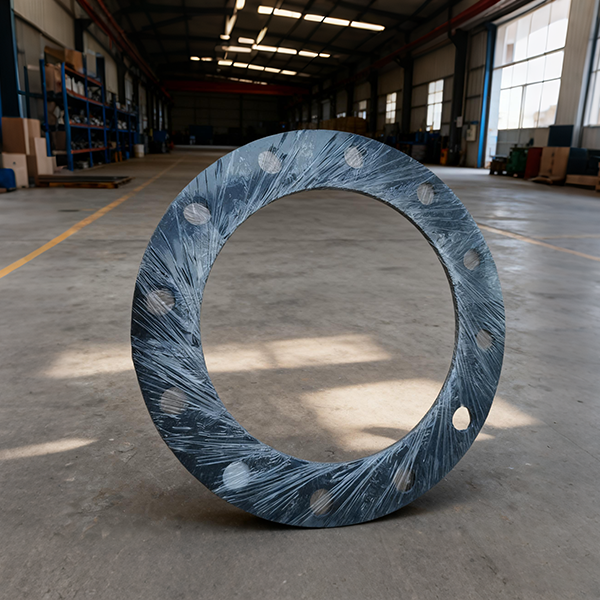
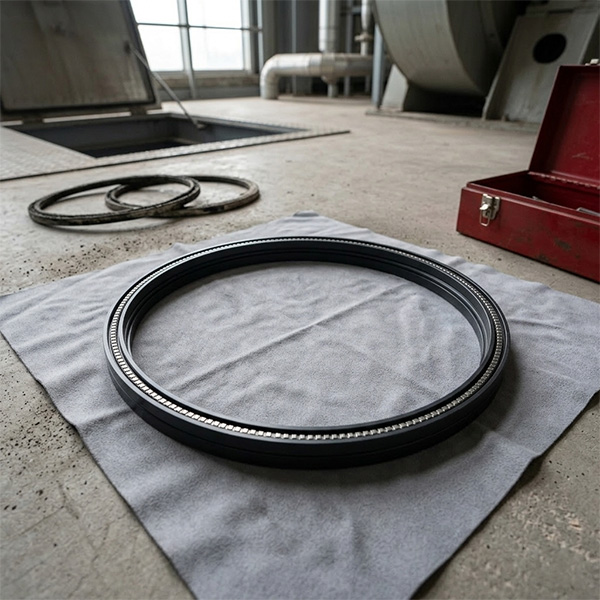
The HZB253-640-03-07 gasket is a custom-made component specifically designed for the HZB253-640 feed pump. It looks like a rubber pad with holes, but its material is anything but simple: it features a layered structure made of aramid fiber + synthetic rubber. The aramid fiber acts as a skeleton, providing strength, while the synthetic rubber functions like a soft glue, filling gaps effectively. It is mainly installed in two critical areas: the connection between the pump body's large cover and the pump casing, and the cover at the pump shaft end.
As a wear-prone part, its replacement frequency aligns with the feed pump's maintenance cycle (typically 12–18 months). Moreover, it doesn't work alone. It collaborates with other sealing components to form a multi-level protection network that prevents water leakage. Compared to ordinary gaskets, it is a high-pressure specialized model, capable of adapting to pressure fluctuations inside the pump without failing under sudden pressure spikes.
II. List of Related Components Table
| Model | Name | Core Function |
|---|---|---|
| HZB253-640-03-07 | Specialized gasket for feed pump | Main sealing component, responsible for sealing the pump body's large cover and shaft end cover |
| HZB253-640-02-07 | Same series gasket | Auxiliary sealing, works with the main gasket to build multi-level protection |
| HZB253-640-03-01 | Same series gasket | Adapts to other low-pressure sealing areas of the feed pump, providing supplementary protection |
| HZB253-640-02-01 | Feed pump sealing ring | Used for sealing small gaps, such as the tiny clearance between the pump shaft and end cover |
| HZB253-640-03-09 | Feed pump O-ring | Auxiliary sealing, enhances leak prevention in critical areas |
| HZB253-H75/110-G115-E1 | Feed pump mechanical seal | Works in synergy with the gasket to improve sealing reliability at the pump shaft |
III. Where Does Its Superpower Lie?
This gasket stands out in power plants thanks to four core advantages:
-
Strength and Sealing Ability: Ordinary rubber gaskets deform easily under pressure, while pure fiber gaskets struggle to seal tightly. The layered structure of this gasket solves both issues. Test data shows that under 200°C for 24 hours, its deformation rate remains below 15%, far exceeding industry standards.
-
Cold and Heat Resistance: Water temperatures in power plants vary widely — as low as -40°C in winter and up to 200°C near the boiler in summer. This gasket remains crack-resistant in low temperatures and does not soften in high temperatures. The aramid fiber maintains structural integrity under heat, while the rubber retains elasticity, making it perfectly suited for complex working conditions.
-
Precision Dimensions: Made with precision molds, its key dimensional errors are within 0.1 mm (thinner than a human hair). Bolt holes align perfectly with pump body holes, preventing uneven stress due to misalignment. The thickness is also carefully calculated — when bolts are tightened, the gasket deforms just enough to seal effectively without premature aging.
-
Corrosion Resistance: Power plant water contains trace oxygen and chloride ions, which can degrade ordinary gaskets over time. The rubber in this gasket is specially treated — after 1000 hours in a simulated environment of 200°C and 10 MPa, it retains over 90% of its strength and experiences less than 5% volume change, easily lasting through one maintenance cycle.
IV. Where Is It On Duty?
-
During New Power Plant Installation: When installing the feed pump, this gasket must be used to seal the connection between the pump body's large cover and the pump casing. Before installation, sealing surfaces must be cleaned thoroughly to remove oil and impurities. The gasket should be laid flat, bolts tightened to specified torque, and used alongside sealing rings and O-rings to form multiple layers of protection.
-
During Routine Maintenance: Each time the feed pump is serviced, this gasket should be inspected. If it appears hardened, scratched, or has excessive deformation, it must be replaced immediately. Especially when repairing the pump shaft or replacing mechanical seals, the gasket should be replaced simultaneously to prevent the old one from holding back performance.
-
During Emergency Repairs: If the pump body suddenly leaks, replacing the gasket quickly after removing the large cover can resolve the issue. Never use non-standard products during such emergencies — incorrect dimensions or poor materials may cause secondary leaks, prolonging downtime.
Though it may seem like a small component, this gasket is a critical link in ensuring the stable operation of a power plant. Its reliability directly impacts the safety of boiler water supply, thereby safeguarding a stable power supply. Next time you hear about a feed pump, you might just remember this little part silently guarding the gate!
HKCYT-2025-11-7


-
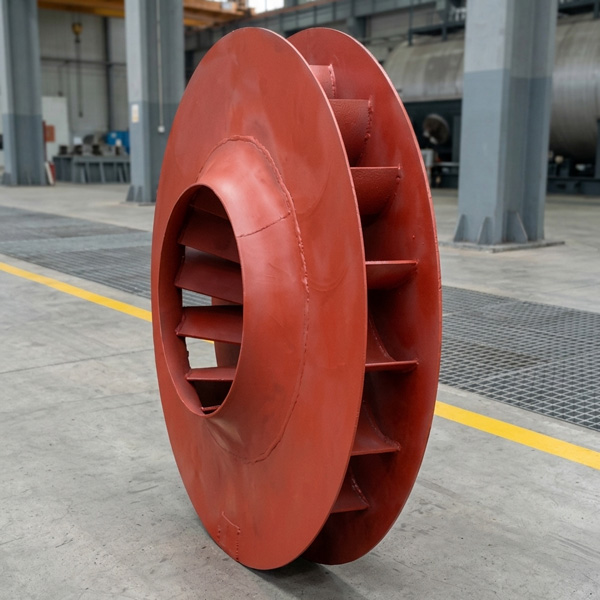
Looking at Abnormal Wear on U250-Y01 Induced Draft Fan Moving Blades
Understand why U250-Y01 induced draft fan blades wear out and how to maintain mechanical linkages. We provide U250-Y01 blades, seals, and connecting rods.03-23
-
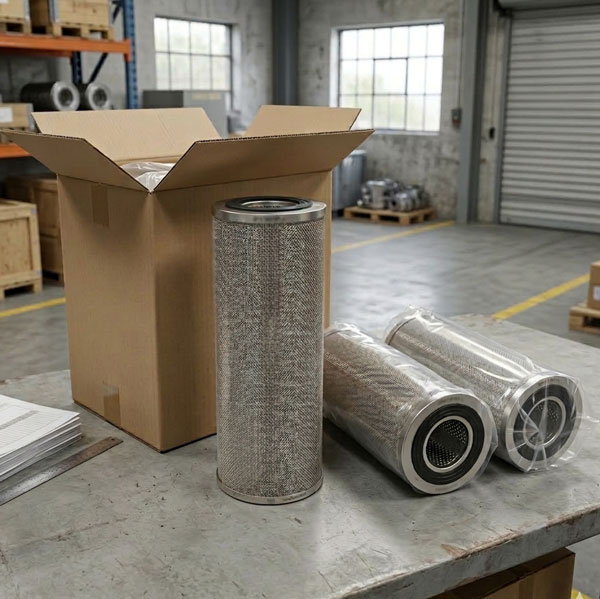
Easy Maintenance with the SDGLQ-60T-36K Duplex Oil Filter for Coal Mills
Learn how to switch the SDGLQ-60T-36K duplex filter element without stopping your coal mill. No oil flow interruption, stable pressure, and zero bypass. Get a quote today.03-17
-
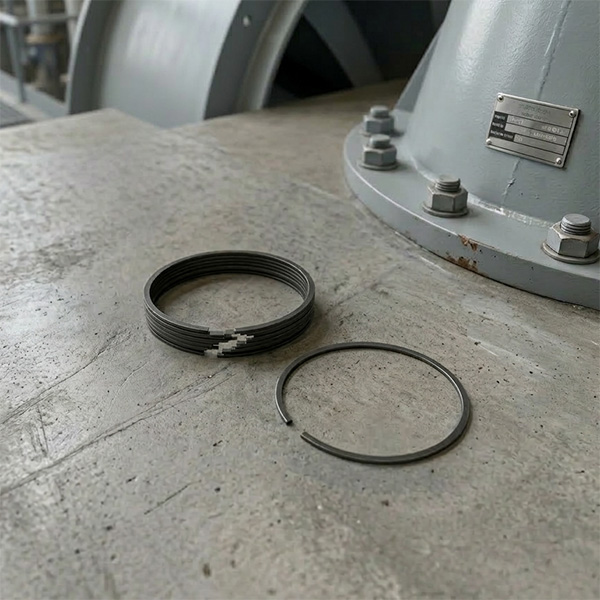
Keeping Your ID Fan Safe with the U2616G2106Y01 Blade Seal Ring
Protect your HU25042-221G fan with the U2616G2106Y01 blade seal ring. Learn how multi-stage sealing prevents bearing jams, blade sticking, and fan stalls.03-12
-
Stopping Oil Leaks with the UYG35/20G010 ID Fan Seal Ring
Stop bearing box leaks with the UYG35/20G010 ID fan seal ring. Learn how gap control and thermal expansion prevent grip failure in induced draft fan spare parts.03-11
-
How to Detect Micro Leakage in Feed Water Pump Gasket FA1D56-03-09 Before It Causes Shutdown
Learn the common failure modes of feed water pump cooling water jacket sealing gasket FA1D56-03-09, including aging, creep relaxation, and mechanical damage. Understand external signs, micro leakage detection methods, and practical maintenance tips to prevent pump shutdown and reduce repair cost.03-02


