


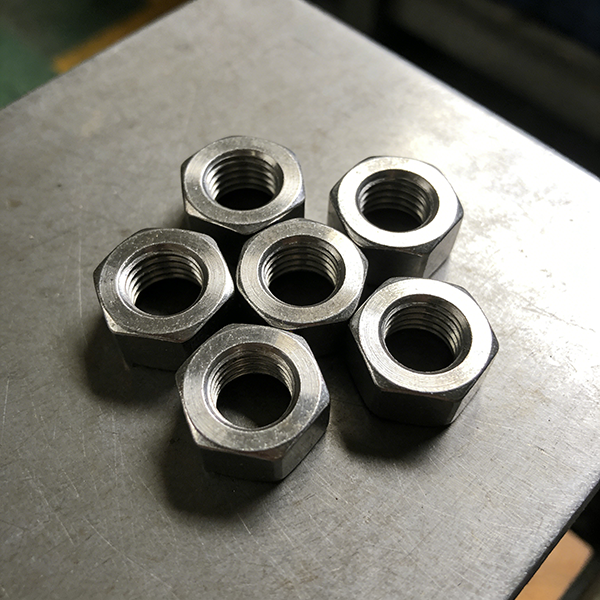
Impeller Nut FA1D56-01-12A: The Impeller Lock for Booster Pump
Many engineers on the boiler booster pump overhaul site end up scratching their heads over the impeller: The nut is tight, but why does the impeller still wobble when the pump runs? The root cause is often the securing part on the non-drive end—the Impeller Nut FA1D56-01-12A. This seemingly standard nut is actually the critical piece that locks the impeller firmly onto the pump shaft. Dongfang SRI, with years in power plant maintenance, is here to explain the secrets of this Impeller Lock.
I. Positioning: Giving the Impeller a Stable Home
This nut is custom-designed for the FA1D56 booster pump. Its core job is simple: hold the impeller securely on the pump shaft FA1D56-01-03A at the non-drive end. It's part of a team; it works with the drive end impeller nut (FA1D56-01-08B). Together, they sandwich the impeller onto the shaft, using dual-end securing to stop the impeller from going off-center or shifting axially when spinning at high speed.
Installation requires precision: it has to be used with the double-end stud FA1D56-03-14. Only when the threads fully engage is the impeller rigidly connected to the pump shaft. More importantly, it also provides the reference base for the mechanical seal sleeve FA1D56-01-07. If the nut's end face is flat and true, the sleeve goes on straight, and the sealing face of the mechanical seal LTJ-8B1D-FA1D56 closes perfectly, preventing fluid leakage.
Here are the core components of the FA1D56 booster pump impeller fastening system. Check this list during your next overhaul:
| Component Category | Product Name | Model Spec | Synergistic Role |
|---|---|---|---|
| Core Fastener | Non-Drive End Impeller Nut | FA1D56-01-12A | Secures the non-drive end impeller, provides sleeve mounting reference |
| Core Fastener | Drive End Impeller Nut | FA1D56-01-08B | Works with the non-drive end nut for securing the impeller on both sides |
| Associated Component | Pump Shaft | FA1D56-01-03A | Carries impeller and nuts, transmits rotational power |
| Associated Component | Double-End Stud | FA1D56-03-14 | Aids nut fastening, strengthens the connection rigidity |
| Seal System Link | Mechanical Seal Sleeve | FA1D56-01-07 | Relies on nut positioning to ensure sealing face alignment |
| Seal System Link | Mechanical Seal | LTJ-8B1D-FA1D56 | Tight sealing depends on precise sleeve positioning, prevents leaks |
II. Built Tough: The Secrets Hidden in Material and Process
1Cr17Ni2 Stainless Steel: Corrosion-Proof and Resilient
The nut is made from 1Cr17Ni2 Martensitic Stainless Steel, containing 17% Chromium and 2% Nickel, making it highly resistant to corrosion. Since the booster pump sometimes leaks fluid, a standard carbon steel nut would rust quickly. This nut resists that. Crucially, it is quenched and high-temperature tempered. This treatment creates a uniform structure, stabilizing the hardness at HRC 32-35.
This hardness is key: Too hard (like the HRC 40 nuts some plants used) and the threads shatter when tightened. Too soft, and it won't lock securely, allowing the impeller to loosen. Our nut hits the sweet spot of stiff enough, yet tough enough, meeting all repair manual specs.
Mechanical Strength: Won't Break at 3000 RPM
Third-party testing proves the strength: Tensile Strength is greater than or equal to 1080 MPa, Yield Strength is greater than or equal to 880 MPa, and Elongation is greater than or equal to 12%. That’s far stronger than standard stainless steel nuts. At full load, the FA1D56 pump's impeller spins up to 3000 r/min, putting huge centrifugal force and torque on the nut. 1080 MPa tensile strength means it can handle massive pulling force without deforming.
The 12% elongation acts as a shock absorber. When the pump starts or stops, the impeller experiences sudden impacts. The nut can slightly deform to absorb this load, preventing sudden failure of the threads' locking force. In one instance, a power plant's impeller experienced an overload due to a power grid fluctuation, but the nut was fine afterward—that’s the benefit of the material’s toughness.
Precision Machining: Ready to Install Immediately
We use CNC turning followed by thread rolling. This delivers 6g grade thread accuracy, with thread profile error less than or equal to 0.02 mm. The fit clearance with the pump shaft is tightly controlled between 0.03 mm and 0.05 mm—it screws on smoothly and tightly. The parallelism error of the nut face is less than or equal to 0.01 mm/m, ensuring over 95% contact with the sleeve face (FA1D56-01-05). This spreads the stress evenly, stopping the sleeve from being crushed or deformed.
The biggest time saver during overhaul: no extra grinding or tweaking is needed. Just grab the nut, line up the threads, and tighten it. This saves half an hour compared to using non-standard parts.
III. Maintenance Scenarios: When to Change It? How to Use It Correctly?
Routine Check: MUST Replace in These Cases
If the booster pump shows abnormal impeller vibration (over 4 mm/s), high bearing temperatures, or mechanical seal leakage, always check this nut during disassembly: If the threads are damaged, worn down, or the hardness is found to be over HRC 35, replace it immediately. After a 600MW plant swapped out old nuts for ours during a 2024 overhaul, impeller vibration dropped from 4.5 mm/s to 2.2 mm/s, hitting the premium operation standard.
Major Overhaul: Mandatory Replacement for Stability
This nut is a mandatory replacement item during a major overhaul. When dismantling the impeller, shaft, and sleeve, the old nut threads will inevitably have some wear. Putting the old ones back risks insufficient locking force. Replacing with a new FA1D56-01-12A, paired with the FA1D56-01-08B nut, ensures the impeller's coaxiality error stays below 0.02 mm. The seal faces will mate perfectly, eliminating the risk of leakage.
Technical Upgrades: Works with Higher Capacity Impellers
Some plants upgrade the FA1D56 pump with higher capacity impellers. The increased torque can break standard nuts. Our high-strength nut is perfectly suited; you don't have to redesign the fastening system. Just swap the nut, which significantly reduces upgrade costs. One older plant reported that the nut remained tight after 15,000 hours of operation post-upgrade.
Choosing the Right Spares: Dongfang SRI Helps You Avoid Mistakes
Don't dismiss this small nut; using the wrong one can cause huge failures. Every batch of Dongfang SRI's FA1D56-01-12A nuts is tested for material, mechanical strength, and precision. They are laser-marked with the model to prevent confusion. We can also supply all the matching components in the table, saving you time searching and comparing prices. Our stock is large, and we can ship the same day for emergency repairs.
Even better, our technical team can help you assess if the nut needs replacing and show you how to use a torque wrench to tighten it to the standard force. For instance, when used with the double-end stud, the torque should be controlled at 180-200 N·m. This locks it securely without damaging the threads.
The stability of the FA1D56 booster pump starts with the secure fastening of the impeller. Dongfang SRI focuses on core power plant spares, offering reliable solutions from a single nut to the complete fastening system. If you have any questions or need spares, contact us anytime to make every overhaul efficient and worry-free.
HKCYT-2025-12-10


-
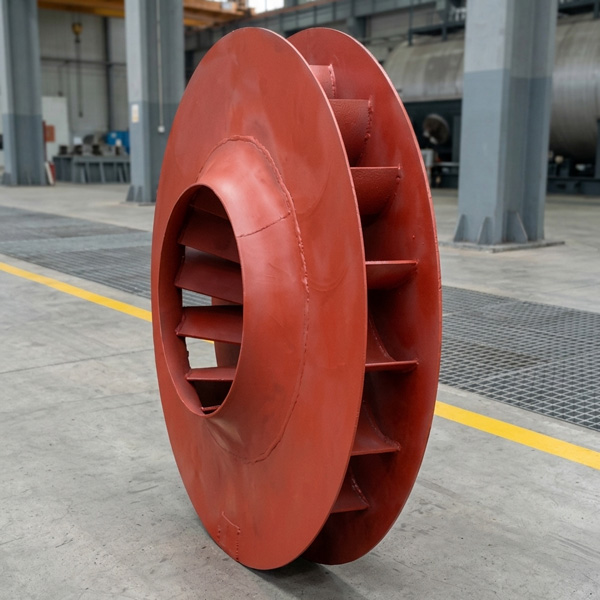
Looking at Abnormal Wear on U250-Y01 Induced Draft Fan Moving Blades
Understand why U250-Y01 induced draft fan blades wear out and how to maintain mechanical linkages. We provide U250-Y01 blades, seals, and connecting rods.03-23
-
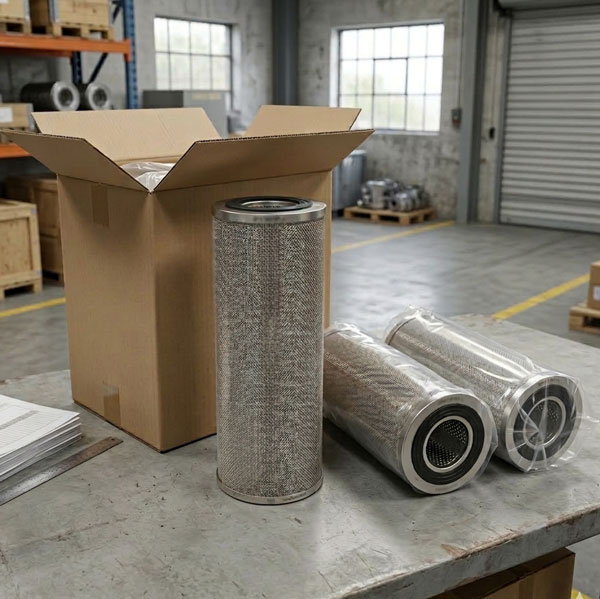
Easy Maintenance with the SDGLQ-60T-36K Duplex Oil Filter for Coal Mills
Learn how to switch the SDGLQ-60T-36K duplex filter element without stopping your coal mill. No oil flow interruption, stable pressure, and zero bypass. Get a quote today.03-17
-
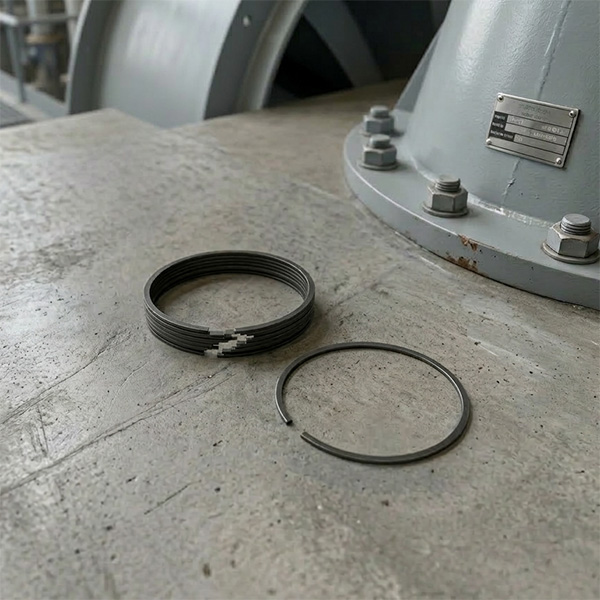
Keeping Your ID Fan Safe with the U2616G2106Y01 Blade Seal Ring
Protect your HU25042-221G fan with the U2616G2106Y01 blade seal ring. Learn how multi-stage sealing prevents bearing jams, blade sticking, and fan stalls.03-12
-
Stopping Oil Leaks with the UYG35/20G010 ID Fan Seal Ring
Stop bearing box leaks with the UYG35/20G010 ID fan seal ring. Learn how gap control and thermal expansion prevent grip failure in induced draft fan spare parts.03-11
-
How to Detect Micro Leakage in Feed Water Pump Gasket FA1D56-03-09 Before It Causes Shutdown
Learn the common failure modes of feed water pump cooling water jacket sealing gasket FA1D56-03-09, including aging, creep relaxation, and mechanical damage. Understand external signs, micro leakage detection methods, and practical maintenance tips to prevent pump shutdown and reduce repair cost.03-02


