


Balance Drum DG600-240VM: How It Handles High Pressure and Why Your Maintenance Matters
In the world of big power plants—thermal or nuclear—the DG600-240 high-pressure feed water pump is a beast. It's got a tough job: taking high-temperature water from the deaerator and pushing it into the boiler at pressures that can hit 20MPa or more.
When you have that much pressure inside a multi-stage centrifugal pump, it creates a massive amount of push on the pump shaft. We call this axial thrust. If you don't find a way to balance that force, it will crush your thrust bearings in minutes. That's where the Balance Drum DG600-240VM comes in. It's the unsung hero that keeps the pump from tearing itself apart.
I. The Balancing Act: How It Actually Works
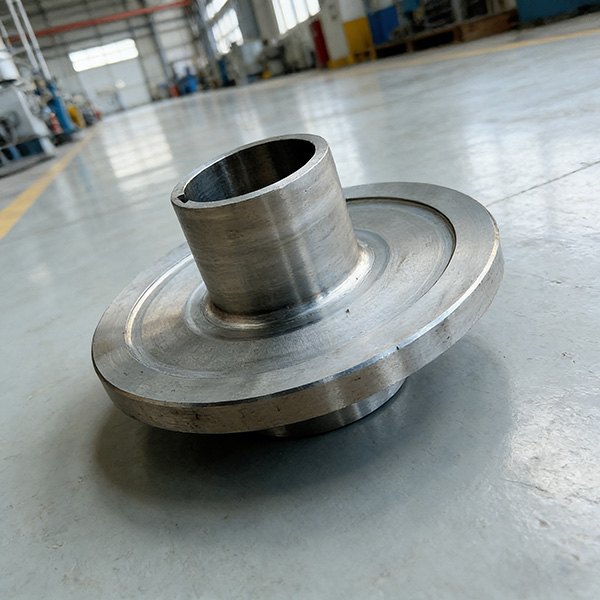
Think of the balance drum as a dynamic hydraulic scale. As the pump runs, high-pressure water comes screaming out of the final stage impeller. Some of that water finds its way into the small gap between the balance drum and the pump casing.
On one side of the drum, you have full discharge pressure. On the other side, it's connected to a low-pressure area, usually the pump inlet. This creates a huge pressure difference. This difference generates a pulling force in the opposite direction of the impellers. When everything is set up right, these two forces cancel each other out. Your thrust bearing stays cool because it's not actually carrying the full load of the pump.
The Secret of Controlled Leakage
One thing people get wrong is thinking the balance drum should be 100% airtight. It shouldn't. The DG600-240VM is designed for controlled leakage. A tiny, steady stream of hot water flows through that radial gap. Why?
- Cooling: That flow carries away the heat caused by friction between the water and the metal. Without it, the drum would expand from the heat and seize up.
- Stability: This flow keeps the pressure drop steady. Whether the pump is running at 50% load or 100%, the balance drum adjusts. It's a dynamic system that keeps the rotor stable no matter what the boiler is doing.
II. Precision Matters: Why Good Enough Isn't Good Enough
We see it all the time during overhauls—someone tries to save money with a non-standard balance drum. Big mistake. If the dimensions are off by even a hair, the whole hydraulic balance of the pump is ruined.
The DG600-240VM from Dongfang SRI is built specifically to handle these high-stress environments. We use high-strength stainless steel, but the real secret is the Surface Hardening.
- Tight Tolerances: We hold the dimensions to ±0.02 mm. Why? Because if that gap is too big, you lose too much high-pressure water (lowering efficiency). If it's too small, the drum might touch the casing and cause a catastrophic failure.
- Toughness: The stainless steel base handles the corrosion, while the hardened surface stops the sandblasting effect of high-velocity water.
In a 600MW unit, the water isn't just liquid; at that speed and pressure, it acts like an abrasive. If your drum isn't hardened correctly, it will wear down in months, and your thrust bearing temperatures will start climbing.
III. Maintenance Secrets: What to Look for During the Outage
When you pull the pump core for a major overhaul, the balance drum tells a story. You just have to know how to read it.
Check the Gaps
The first thing you do is measure the radial clearance. Don't just eyeball it. Use a micrometer. If the gap has opened up beyond the design limit, you're losing pressure. That means your thrust bearing is working harder than it should.
Look at the Surface
Look for grooving or uneven wear. If you see deep lines, it means debris got into the system. If you see rainbow colors, it means the drum got too hot—likely because the balance line was restricted or the clearance was too tight.
IV. The Support Team: Don't Forget the Small Parts
A balance drum is only as good as the seals and bolts around it. If your O-rings are flattened or your bolts are stretched, the drum can't do its job.
Here is a quick look at the parts that must be checked whenever the balance drum is serviced:
| Part Name | Model / Spec | Why it's there |
|---|---|---|
| Sealing Washer | DG600-240-04-06 | Stops the high-pressure water from taking a shortcut around the drum. |
| Main O-Ring | DG600-240-07-01 (10) | The primary seal. It has to handle 200°C+ water without melting. |
| Backup Ring | DG600-240-07-02 (4) | Stops the O-ring from getting squeezed out by the high pressure. |
| Casing Bolt | DG600-240-04-30 | These keep the whole assembly tight. If they stretch, the gaps change. |
| End Cover | DG600-240-05-19 | This creates the room the balance drum lives in. It must be perfectly flat. |
V. Expert Summary: Keeping the Pump Happy
At the end of the day, the DG600-240VM is about one thing: control. It controls the pressure, it controls the thrust, and it controls how long your pump stays in service.
If you want your feed water pump to run until the next scheduled outage without any surprises, you have to be disciplined. Use original-spec parts. Measure your clearances twice. And never, ever ignore a spike in your balance line temperature.
We've seen these pumps run for years without a hitch when the balance drum is maintained correctly. It's the difference between a smooth-running plant and an emergency midnight repair.
HKCYT-2026-01-09


-
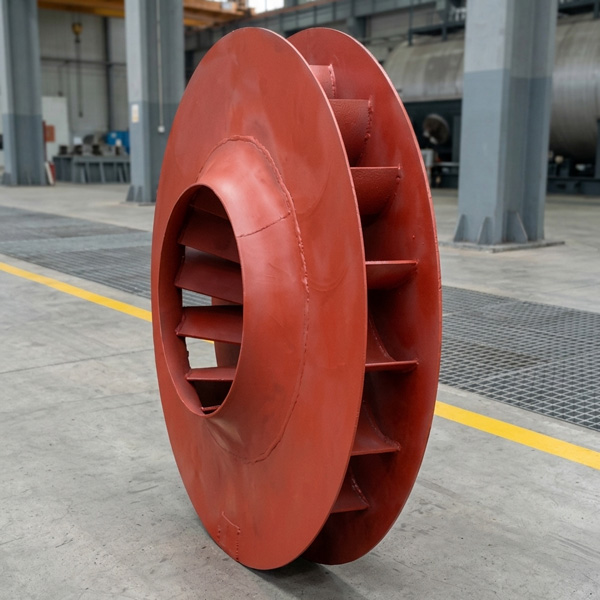
Looking at Abnormal Wear on U250-Y01 Induced Draft Fan Moving Blades
Understand why U250-Y01 induced draft fan blades wear out and how to maintain mechanical linkages. We provide U250-Y01 blades, seals, and connecting rods.03-23
-
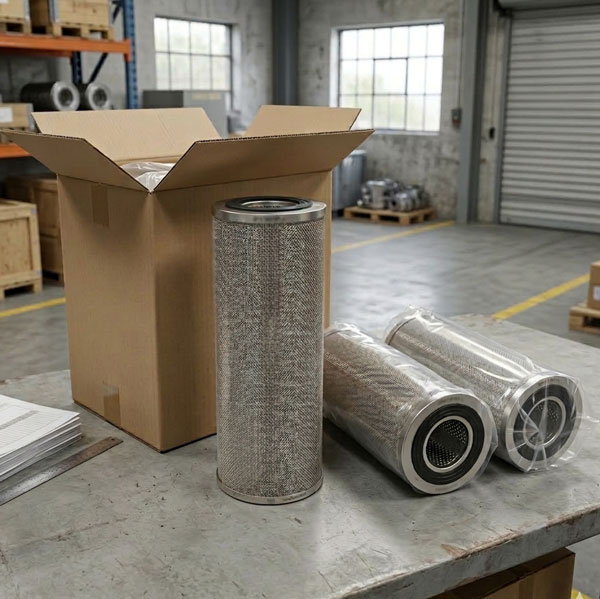
Easy Maintenance with the SDGLQ-60T-36K Duplex Oil Filter for Coal Mills
Learn how to switch the SDGLQ-60T-36K duplex filter element without stopping your coal mill. No oil flow interruption, stable pressure, and zero bypass. Get a quote today.03-17
-
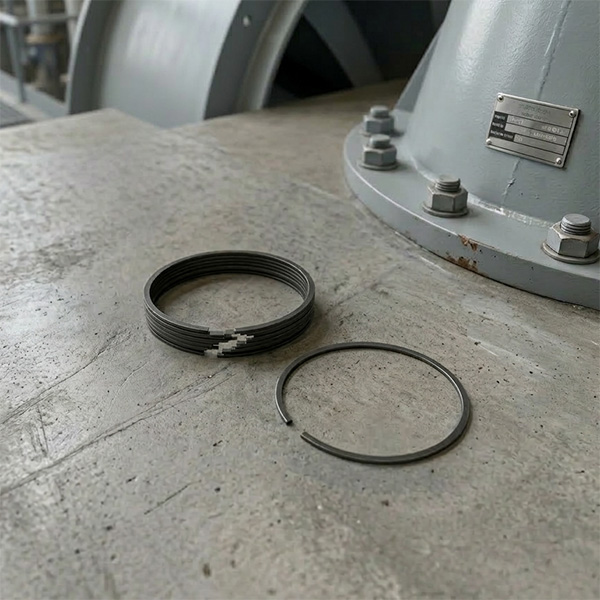
Keeping Your ID Fan Safe with the U2616G2106Y01 Blade Seal Ring
Protect your HU25042-221G fan with the U2616G2106Y01 blade seal ring. Learn how multi-stage sealing prevents bearing jams, blade sticking, and fan stalls.03-12
-
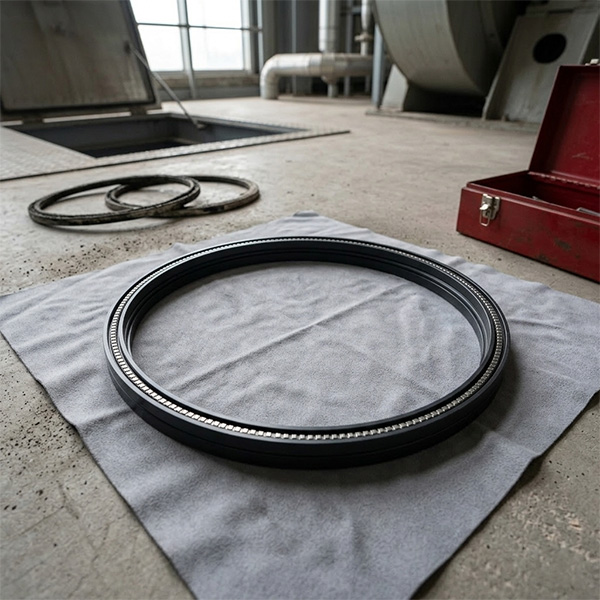
Stopping Oil Leaks with the UYG35/20G010 ID Fan Seal Ring
Stop bearing box leaks with the UYG35/20G010 ID fan seal ring. Learn how gap control and thermal expansion prevent grip failure in induced draft fan spare parts.03-11
-
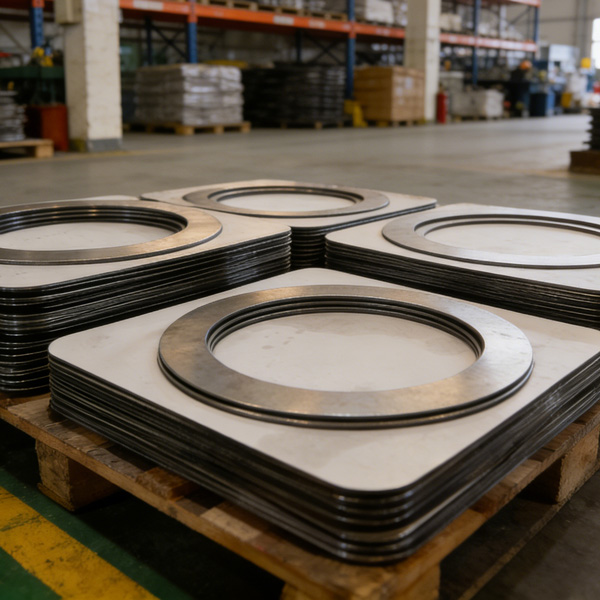
How to Detect Micro Leakage in Feed Water Pump Gasket FA1D56-03-09 Before It Causes Shutdown
Learn the common failure modes of feed water pump cooling water jacket sealing gasket FA1D56-03-09, including aging, creep relaxation, and mechanical damage. Understand external signs, micro leakage detection methods, and practical maintenance tips to prevent pump shutdown and reduce repair cost.03-02


